

Summary
Specifying commercial façades requires balancing aesthetic vision with strict building envelope physics. This guide evaluates traditional cladding, early plastics, and next-generation Enhanced Fiber Composite (EFC) systems to help architects maximise thermal efficiency and eliminate callbacks.
Specifying vertical exterior surfaces requires balancing strict aesthetic visions with unforgiving environmental exposure, UV degradation, and complex thermal dynamics. For modern architects and building design professionals across Europe, the building envelope represents the most critical barrier between structural longevity and premature asset degradation.
Key Takeaways:
- Traditional wood-plastic composites remain vulnerable to environmental decay, whereas next-generation Enhanced Fiber Composite (EFC) utilizes a protective polymer matrix and mineral additives to deliver complete environmental immunity.
- EFC provides excellent dimensional stability and low thermal movement due to its rigid rice husk fibre reinforcement, enabling architects to specify tight joint tolerances without risk of warping.
- Specifying EFC serving as a highly cost-effective composite cladding choice by eliminating long-term maintenance costs, scaffolding requirements, and post-occupancy callbacks.
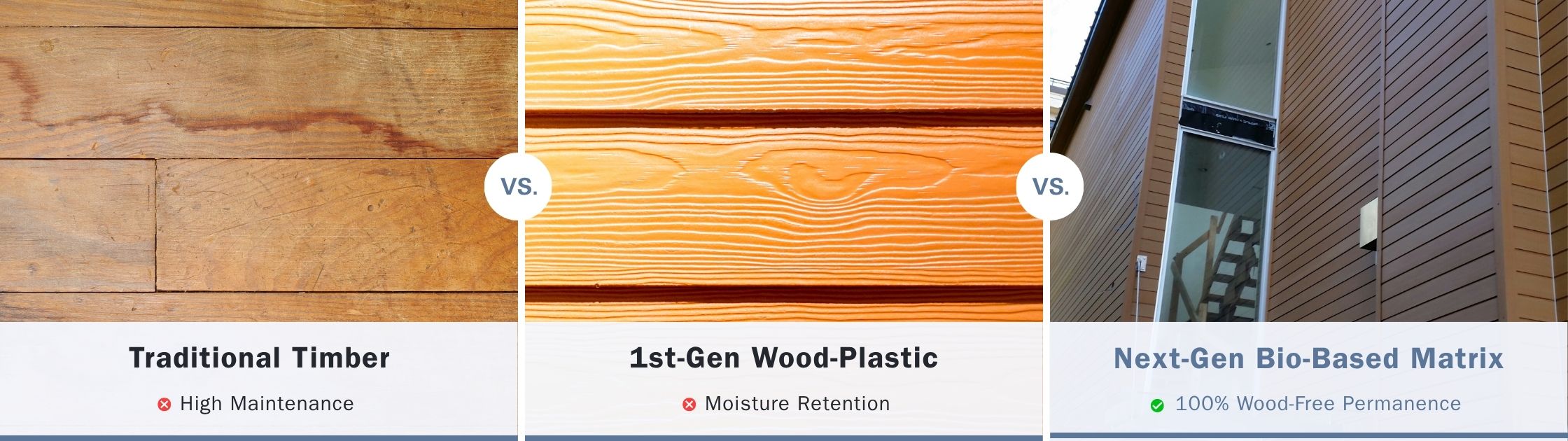
Historically, this balance has been difficult to maintain. Traditional timber cladding demands an ongoing, rigorous maintenance schedule that building owners frequently neglect, leading to moisture intrusion, rot, and radical dimensional shifts. Conversely, first-generation composite building façades often suffered from heavy thermal movement, structural bowing, and rapid colour fading when exposed to sustained UV radiation.
As regulatory frameworks tighten and climate patterns become more volatile, relying on outdated material chemistry introduces unacceptable post-occupancy risk. This technical guide evaluates current cladding material choices through a rigorous material science lens. By analysing structural performance, environmental resistance, and life-cycle economics, this article helps specifiers select high-performance, cost-effective composite cladding systems that protect project integrity, enhance thermal efficiency, and eliminate costly post-occupancy callbacks.
Comparative Material Science: Evaluating the Types of Façade Material
Selecting the optimal envelope material requires understanding how different types of façade material behave at a molecular level under environmental stress.
The Traditional Baseline: Natural Timber and Fiber Cement
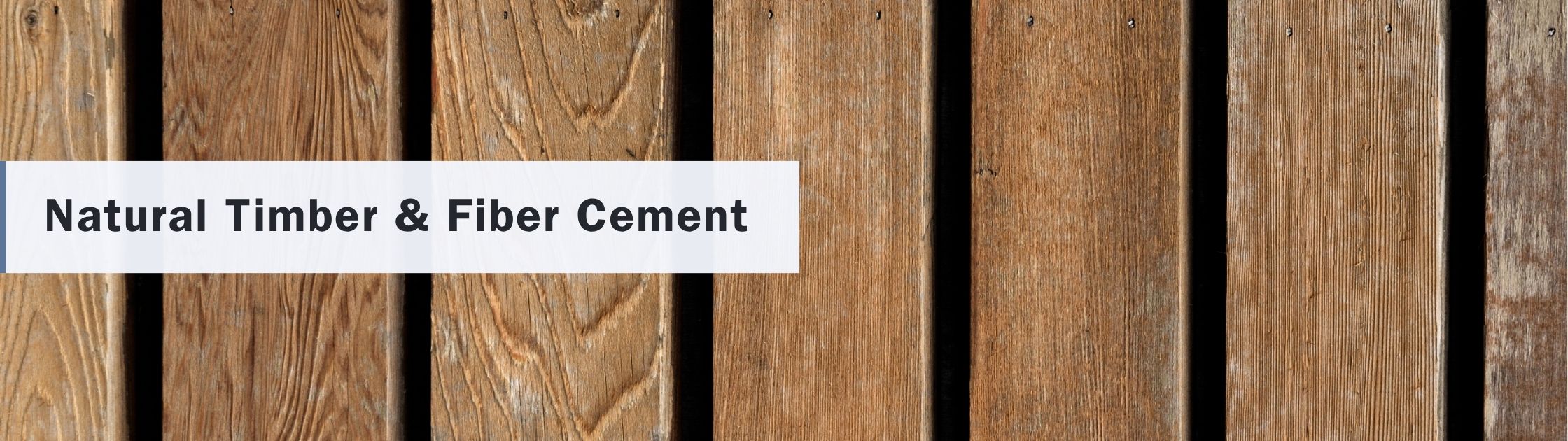
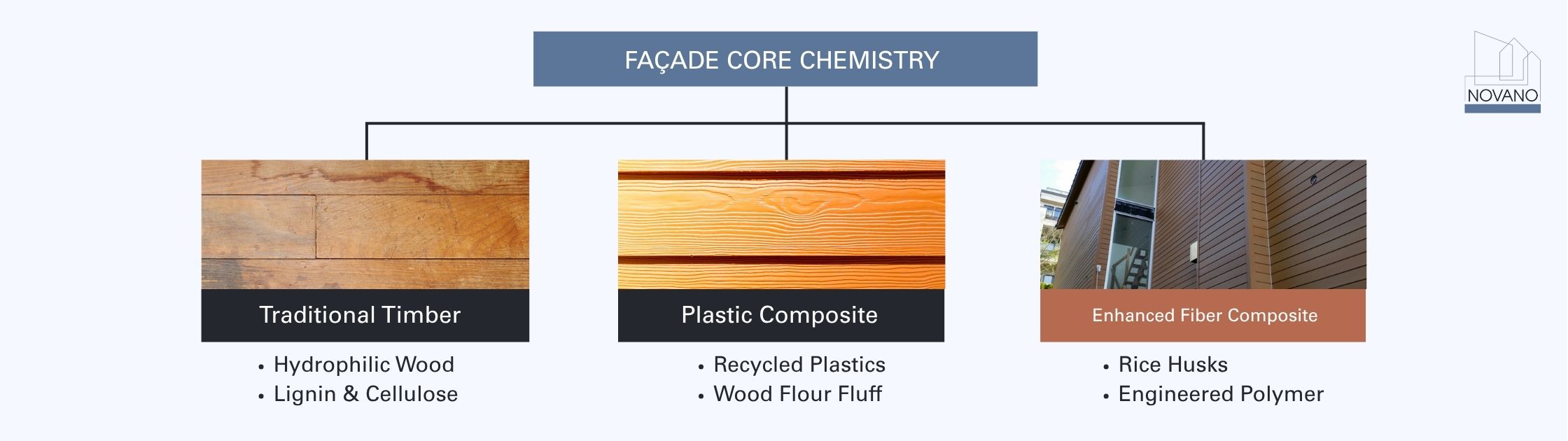
Natural timber remains a familiar benchmark due to its organic warmth. However, raw timber is inherently hydrophilic (water-attracting); its cellular structure continuously absorbs and releases ambient moisture, causing inevitable warping, checking, and splitting. Fiber cement offers better fire resistance but presents challenges regarding weight, fragile handling characteristics during installation, and micro-cracking at fastening points over extended freeze-thaw cycles.
First-Generation Plastic Composites
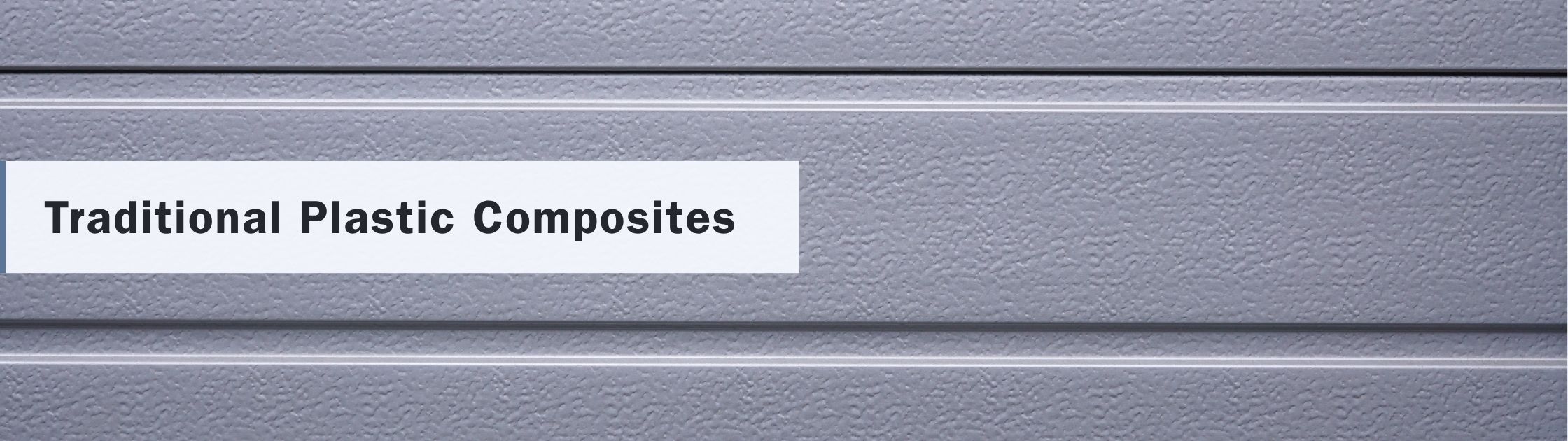
Developed as a low-maintenance alternative, early composite products typically combine recycled polymers (such as HDPE or PVC) with pulverised wood flour. While these systems eliminate the need for annual staining, the organic wood fibres remain highly vulnerable. Capillary action can draw moisture into the core, leading to internal microbial growth, fungal decay, and core delamination under intense UV exposure and driving rain.
The New Architectural Standard: Enhanced Fiber Composite (EFC)
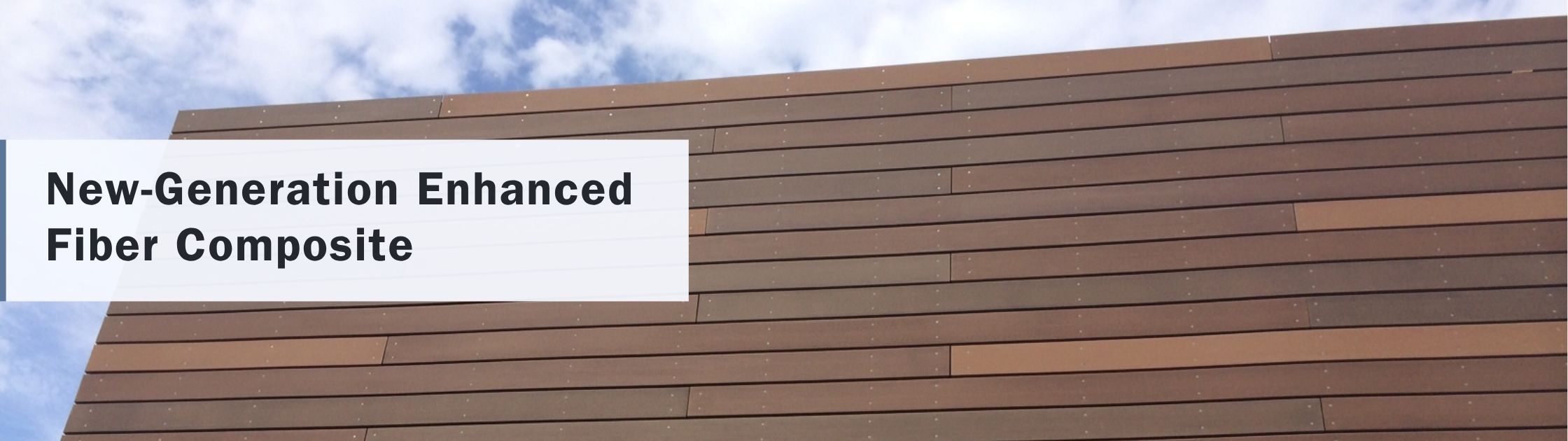
To resolve these systemic vulnerabilities, material engineers have introduced advanced composite materials known as Engineered Fiber Composite (EFC). Moving away from primitive plastic-wood blends, EFC is a highly controlled, sophisticated material system engineered using three primary, synergistic components:
- Fiber Reinforcement: A bio-based reinforcement derived from silica-rich rice husks, an agricultural byproduct that contributes structural stiffness, exceptional dimensional stability, and significantly improved wear resistance.
- Polymer Matrix: A high-performance matrix that completely binds the material system, providing robust structural cohesion while actively protecting the core against moisture ingress and environmental exposure.
- Mineral Performance Additives: Specialised mineral additives distributed throughout the matrix to enhance surface hardness, bolster durability, and guarantee long-term weather resistance.
Together, these highly engineered components create a composite material designed for controlled, predictable, and consistent behaviour throughout its entire structural service life.
Performance Criteria: What Makes a Material “The Best” for Residential & Commercial Envelopes?
For a specifier, the best materials for outdoor façades must demonstrate proven structural compliance, safety, and long-term surface integrity under mechanical and environmental loads.
| CRITICAL ENVELOPE PERFORMANCE MATRIX | ||
| Dimensional Stability | Low thermal expansion, tight joint profiles | |
| Moisture Management | Hydrophobic matrix, open-joint rainscreen | |
| Fire Safety Compliance | EN 13501-1 Class B/A2 or local equivalents | |
Dimensional Stability & Thermal Movement
Linear thermal expansion is a critical vulnerability in standard polymer-heavy exterior cladding material options. High summer track temperatures cause boards to expand, stressing hidden fastening systems and distorting panel joints.
The Solution: The bio-based fibers within enhanced fiber composite material anchor the polymer matrix, resulting in significantly lower thermal movement compared to PVC or PE-based alternatives. Enhanced Fiber Composite is rigorously tested under ASTM E831-25 (mean coefficient of linear thermal expansion), this structural stability allows architects to specify tight, clean joint tolerances and crisp geometric lines across long elevations without fearing buckled profiles or sheared clips.
Moisture Management & Vapor Permeability
When detailed as an open-joint rainscreen system, the rear face of the cladding panel is exposed to continuous airflow and pressure differentials.
The Solution: EFC’s advanced polymer matrix encapsulates the fiber reinforcement. Evaluated under ISO 62 (water absorption), it absorbs virtually zero water, remaining completely unaffected by standing moisture or vapor trapped within the drainage cavity. This eliminates the risk of sub-surface mould growth and maintains the structural integrity of the structural wall behind the façade.
Safety, Compliance, and Structural Integrity
- Wind-Load Resistance: Modern high-rise architecture across the European coastlines demands exterior cladding material that withstands intense negative pressure deltas.
The Solution: EFC features superior flexural strength due to its unique mineral and fiber integration, resisting wind-load deflection and staying secure within engineered clip tracks under extreme conditions. - Fire Safety: Compliance with residential and commercial fire regulations is mandatory for multi-storey builds.
The Solution: EFC façade systems incorporate halogen-free flame retardants within their core matrix to ensure low flame spread and minimal smoke toxicity. This outstanding performance is validated globally and locally, meeting both ASTM E84 (Surface Burning Characteristics) and the rigorous BS 476 Part 6 & 7 (Fire Propagation and Flame Spread) standards.
Surface Integrity & UV Resistance
Unprotected polymers degrade rapidly when exposed to ultraviolet radiation, leading to surface chalking and severe colour fading.
The Solution: EFC building façades employ co-extruded outer caps or advanced factory finishes, such as ArmorTone™ or Novano with PPG Proluxe® systems. Bolstered by inner mineral performance additives that enhance surface hardness, these technologies create an un-compromised barrier that resists scratching, rejects atmospheric pollutants, and ensures uniform colour retention across northern and southern elevations alike.
Life-Cycle Cost Analysis (LCCA): True Cost-Effectiveness in Specification
When evaluating façade budgets, forward-thinking architectural practices look past the initial material invoice to analyse total life-cycle expenditures over a 30- to 50-year building lifespan.
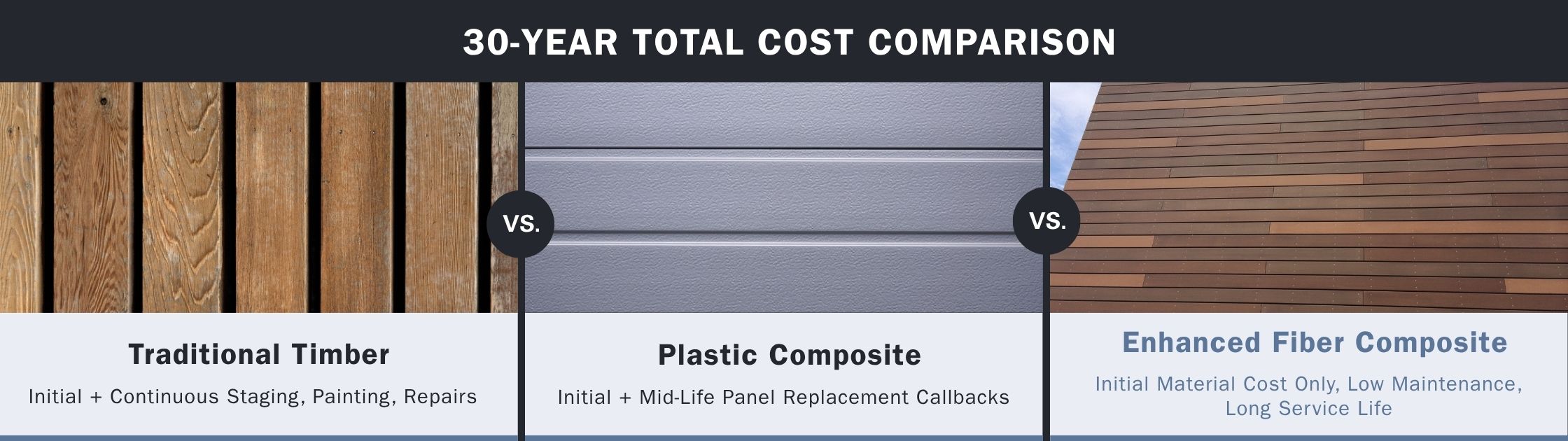
Specifying natural timber or lower-grade plastics often introduces hidden operational costs. Every few years, building owners must fund scaffolding, staging, surface preparation, and re-coating to preserve the façade. In urban commercial environments, the logistical cost of street closures and access equipment can easily outpace the original cost of the cladding itself.
Opting for high-performance, cost effective composite cladding alters this financial equation. Because EFC eliminates structural rotting, warping, and the need for regular painting, the asset owner’s ongoing maintenance cost is virtually zero. The initial investment pays for itself early in the building’s operational lifecycle by avoiding regular maintenance interruptions and early material failures.
Streamlining the Submittal Process: Sourcing and Technical Support
Executing an uncompromised building envelope requires moving away from generalised building merchant networks. The best place to buy composite cladding for commercial scale developments is directly from dedicated architectural-grade manufacturers with local partner distributors.
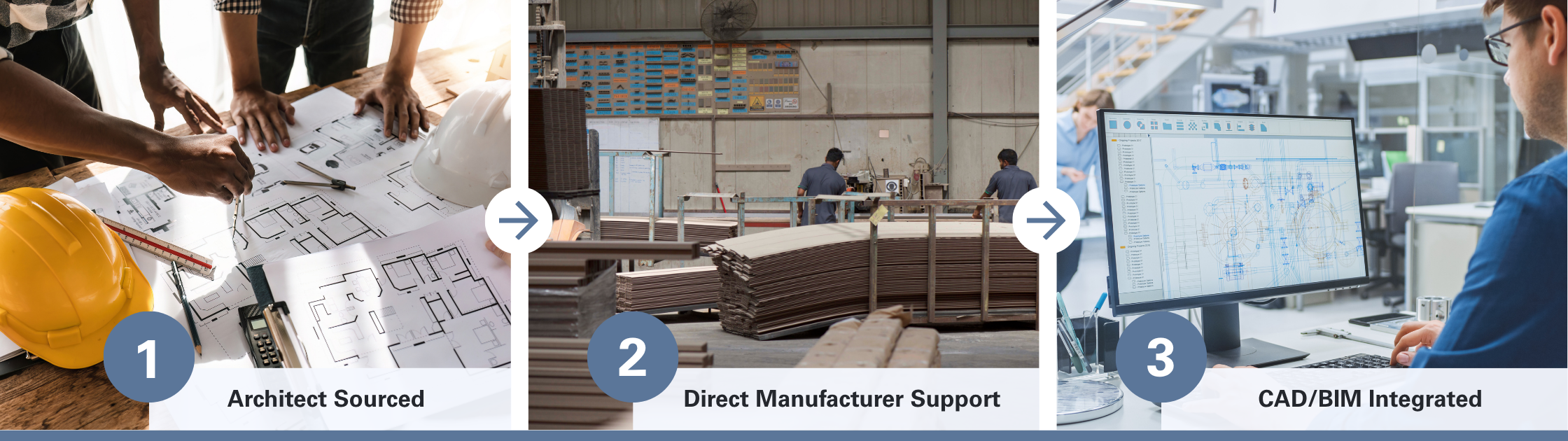
Partnering directly with specialised technical manufacturers provides design teams with:
- Custom profile extrusions and bespoke colour-matching services.
- Comprehensive technical data sheets covering comprehensive wind-load, impact, and fire testing.
- Full BIM/Revit object integration for precise digital twin modelling.
- Verified certifications to secure crucial credits and rating systems.
Designing for Permanence
Modern architecture demands building envelopes that respect natural design aesthetics while leveraging advanced material science. Enhanced Fiber Composites effectively close the historic gap between architectural intent, long-term building envelope durability, and sustainable engineering. By choosing materials that utilize a controlled, three-part system of bio-based fibers, polymer cohesion, and performance minerals, architects can deliver permanent, beautiful façades that perform flawlessly for decades.
Elevate your next project’s exterior performance and thermal efficiency. Contact Novano’s dedicated architectural support team today to discuss custom profile manufacturing capabilities, arrange an engineering consultation, or request a complimentary architectural cladding sample kit.

FAQs
What makes Enhanced Fiber Composite (EFC) a more sustainable type of façade material compared to traditional timber and plastic composites?
Unlike natural timber and plastic composites, which contributes to deforestation and requires toxic chemical preservatives, EFC utilizes upcycled bio-based rice husk reinforcement within a stable engineered polymer matrix. This formulation creates a durable, consistent façade material that requires no atmospheric coatings or treatments throughout its long service life.
Where is the best place to buy composite cladding system for large-scale commercial developments?
Commercial projects should bypass general building merchants and source directly from specification-grade manufacturers with local partner distribution that provide engineering consultations and custom profiles. This direct procurement route ensures access to essential technical data sheets, BIM models, and comprehensive project warranties.
How do these new EFC cladding materials perform under strict European fire safety standards?
High-performance Enhanced Fiber Composites are manufactured with specialised mineral additives and halogen-free fire retardants to meet rigorous building safety codes. Validated by global and regional benchmarks including ASTM E84 and BS 476 Part 6 & 7, this ensures low flame propagation and minimal smoke toxicity, making EFC highly suitable for multi-storey residential and commercial applications.
Why is dimensional stability such a critical metric when choosing the best materials for outdoor façades?
Materials with poor dimensional stability expand and contract drastically during temperature swings, causing warped panels, elongated fastener holes, and compromised joints. Selecting EFC ensures minimal thermal movement due to its rigid fiber reinforcement framework, preserving crisp design lines and preventing long-term structural fatigue.