


Summary
Modern architecture is shifting toward high-performance enhanced fiber composites to meet net-zero goals. Utilizing silica-rich rice husk, these materials eliminate traditional wood vulnerabilities. Through its proprietary technology, Novano integrates material science with flawless installation.
Modern architecture is caught in a high-stakes squeeze play. Global developers and architects face increasing pressure from regulators to hit strict net-zero carbon targets, while the commercial market simultaneously demands faster builds, longer lifespans, and striking aesthetics.
Key Takeaways:
- Material Shift: Advanced bio-composites leverage silica-rich agricultural waste like rice husk to achieve structural-grade durability and natural beauty without the rot or warping of traditional timber.
- Circular Longevity: Modern thermoplastic engineering enables composites to be fully recyclable at the end of a building’s lifecycle, matching strict LEED and BREEAM sustainability standards.
- System Innovation: Novano’s proprietary technology transcends raw material innovation by integrating precision profiles, thermal control, and hidden mechanical locks into a single co-engineered system.
For decades, the global construction industry relied on a predictable trio: concrete, steel, and traditional timber. However, these materials are hitting clear physical, financial, and environmental limits. Traditional timber rots, warps, and requires constant upkeep. Meanwhile, heavy concrete and carbon-intensive steel carry massive environmental footprints that conflict with green certifications.
As a result, progressive design teams are looking toward material science to find the perfect bridge between high-load structural performance and strict carbon compliance. The most promising solution isn’t found in mining deeper, but in engineering smarter through the latest innovations in composite materials for construction.
Plant Power: The Shift Toward Bio-Composites and Natural Reinforcements
The concept of mixing natural fibers with polymers isn’t entirely new, but early iterations left much to be desired. First-generation attempts at plastic lumber lacked the warmth, depth, and organic appearance that architects wanted. Worse, they lacked structural stability. Today, a sophisticated shift toward advanced Bio-Composites & Natural Fiber Reinforcements is completely rewriting that narrative.
Rather than relying on basic wood flour, modern material scientists look to resilient agricultural byproducts that offer inherent structural advantages. A prime example is rice husk, a natural bio-fiber rich in silica. When combined within a carefully engineered, wood-free composite system, this silica contributes exceptional hardness, dimensional stability, and natural weather resistance.
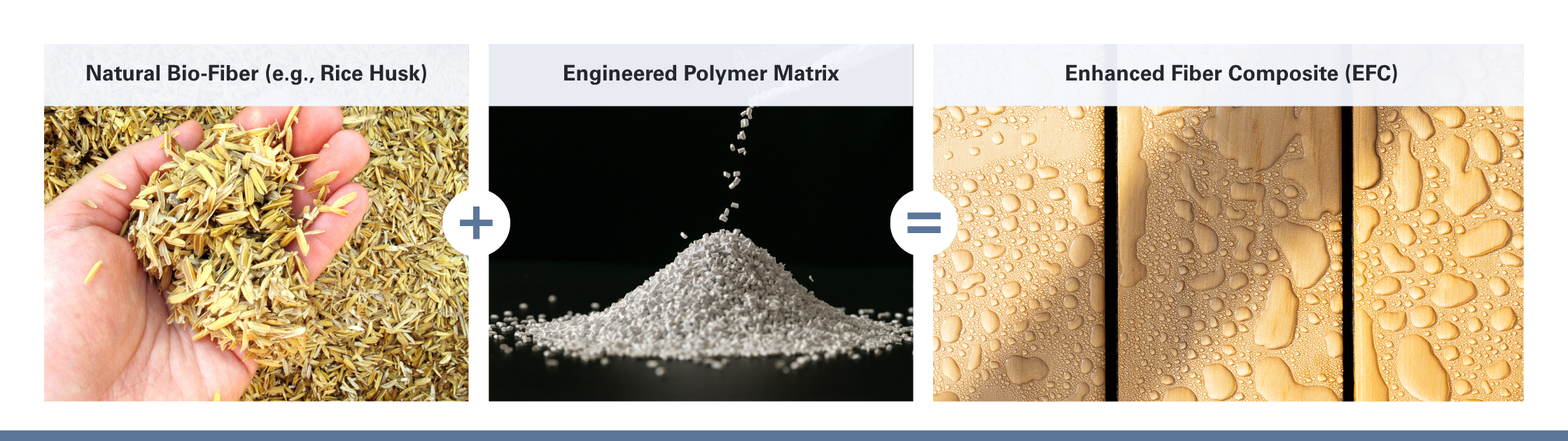
Through specialized modification strategies, these advanced enhanced fiber composites overcome the traditional biological vulnerabilities of raw wood. They resist moisture absorption, eliminate the risk of subterranean rot, and remain entirely immune to termite damage, all while acting as a carbon-sink that locks emissions directly into the building envelope.
Closing the Loop: The Rise of Fully Recyclable Composites
Historically, the biggest critique of high-performance building composites was their lifespan dead-end. Traditional thermoset resins, once cured, could not be easily melted down or repurposed, leaving them destined for landfills. Modern engineering solves this issue through a transition to highly stable, advanced Recyclable Composites.
By utilizing sophisticated thermoplastic polymer systems, manufacturers can now design for a true circular construction framework. The material can be cleanly processed, and at the end of a building’s lifecycle, it can be ground down, re-extruded, and formed into new structural elements without losing its mechanical properties.
- Design for Deconstruction: Materials are engineered from day one to be reclaimed and remolded.
- Circular Construction Materials: Adopting recyclable composites directly satisfies stringent circular economy credits under global green frameworks.
- LEED & BREEAM Target Realization: Utilizing fully circular building materials minimizes the lifetime Scope 3 emissions of major commercial developments.
The Ultimate Evolution: Novano’s Proprietary Technology
Even the most advanced building material can only perform as well as the design system surrounding it. For over twenty years, the foundation of Enhanced Fiber Composite (EFC) technology was proven in the world’s harshest testing grounds, from high-traffic marine public jetties to the intense humidity and relentless UV exposure of Hong Kong’s iconic Victoria Peak.
However, real-world execution revealed a vital lesson: material innovation must eventually become system innovation. Variations in third-party framing, fasteners, and field installation could still compromise a project’s ultimate architectural outcome.
The Novano Shift: True structural evolution requires controlling the entire architectural system, not just the raw composite material.
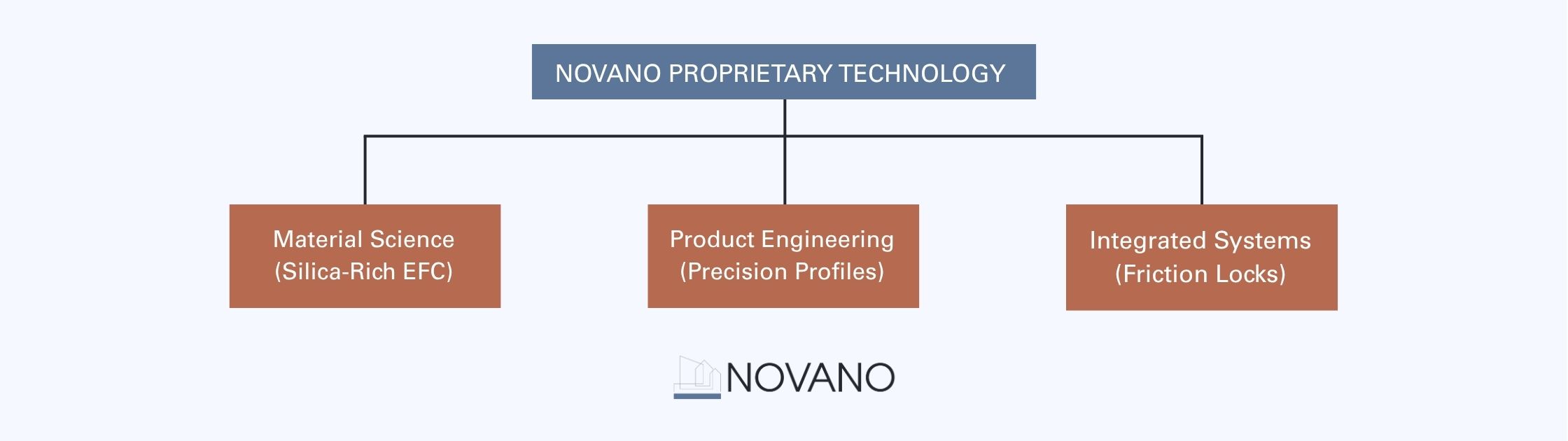
To maximize this potential, Novano developed its proprietary technology platform. Novano synthesizes advanced material science, precision product engineering, and intelligent installation systems into a singular, integrated architectural solution. Rather than treating siding, decking, cladding, or soffits as detached components, Novano’s proprietary technology ensures that the composite material and its structural sub-framing operate as a single, co-engineered unit.
- Controlled Thermal Movement: Novano’s proprietary profiles account for expansion and contraction dynamically, eliminating warped boards and buckling in extreme climates.
- Moisture-Defying Architecture: Integrated rear-ventilation and advanced drainage paths prevent structural moisture traps and fungal growth.
- Flawless Fastening Systems: Specialized, hidden mechanical locking systems eliminate surface penetrations, protecting the core material while accelerating on-site installation speeds for building crews.
- Advanced Coating Systems: Incorporates premium technologies like ArmorTone™ for decking and PPG Proluxe® finishes for siding, ensuring long-term color stability, UV-fade resistance, and fire-safety compliance.
By managing the entire building ecosystem from raw polymer formulation to the final locking joint, Novano reduces on-site variability, guarantees predictable outcomes, and delivers an exterior that is Naturally Beautiful, Durable On Purpose.
Designing the Next Horizon
The convergence of bio-origins, recyclability, and Novano’s systemic engineering fundamentally changes the long-term ROI of material selection. The modern building industry is rapidly moving away from cheap, high-maintenance materials toward complete exterior systems engineered for decades of predictable performance.
As global supply chains tighten and green building codes become the mandatory standard, the integration of complete architectural composite systems will shift from a premium choice to a regulatory baseline. Ultimately, a material shouldn’t be judged by how it looks on the day of handover. It must be judged by how it responds to climate, use, and time. Through Novano’s proprietary technology, architects, developers, and engineers can finally build with absolute confidence.

FAQs
What are the primary benefits of using an enhanced fiber composite over traditional wood?
Unlike raw timber, an enhanced fiber composite resists moisture absorption, rot, and termite damage while maintaining dimensional stability under severe weather conditions. It also acts as a reliable carbon-sink, capturing and storing carbon emissions directly within the building envelope.
How does Novano turn agricultural waste into a high-performance building material?
Novano utilizes rice husk fibers, an agricultural byproduct naturally rich in silica, to provide exceptional hardness and weather resistance. When embedded within an engineered polymer matrix, this material creates a durable exterior system that outperforms standard wood-plastic options.
Are modern building composites recyclable at the end of their lifecycle?
Yes, the transition from old thermoset resins to advanced thermoplastic polymers ensures these materials are fully recyclable. At the end of a building’s lifecycle, the composite can be cleanly melted down, re-extruded, and remolded into new structural elements.
What makes Novano’s proprietary technology different from standard composite siding or decking?
Instead of selling standalone boards, Novano provides an integrated system where precision profiles, advanced protective coatings, and hidden mechanical locking joints work together. This holistic approach manages thermal movement, ensures moisture-defying rear ventilation, and eliminates the field errors common with third-party components.